USS New Jersey (SSN-796) Support Organization · Quarterly Newsletter · Issue 2
Built to Go Where Others Can't
In This Issue
The Journey to Earn the Dolphins
Systems Spotlight: L3Harris, built in Camden, NJ
Welcome aboard the new Chief of the Boat
Life in Norfolk: a busy 2026 for the crew
Turtle: America's first submarine attack, 1776
Source: U.S. Navy photo (via L3Harris)
From the Chairman
250 Years On, the Crew Front and Center
What better time to send a newsletter, timed perfectly to help us celebrate the 250th anniversary of our founding, and recognize all of the events (and the people around them) that have molded this country into the best in the world.
We've made some adjustments to this quarter's edition. Format changes are easy to see. More important, though, is the change to content. We're committed to focusing more on the boat and her crew: their service, their professionalism, their excellence. Our readers keep telling us they want to hear about USS New Jersey (SSN-796), so this quarter we put the crew front and center.
You will find the story of how Sailors earn their dolphins, a look at the New Jersey industry that helps the boat listen, communicate, and see, a welcome for the new Chief of the Boat, and a roundup of what the crew has accomplished in 2026. We have no pride of authorship here. We just want to recognize the crew and keep our supporters engaged.
Thank you to the families and supporters across New Jersey who keep the home front strong.
Enjoy the 4th! And thank a Sailor!
Leadership
Welcome Aboard: A New Chief of the Boat
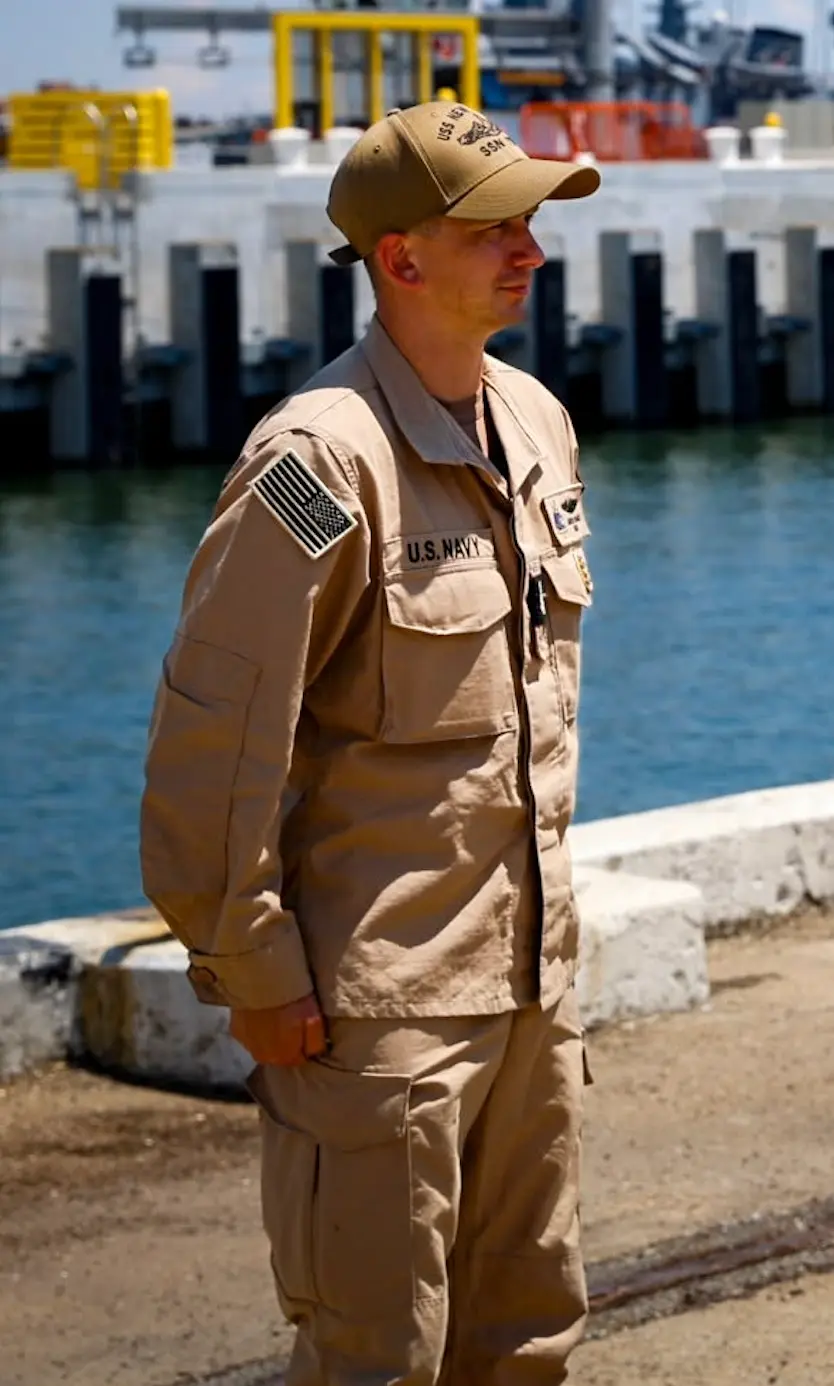
In May, MMACS(SS) Jared Fouke relieved ETVCM(SS) Joseph "Joey" Calhoun as Chief of the Boat aboard USS New Jersey (SSN-796). The COB is the senior enlisted Sailor on board and a key part of the leadership triad, responsible for the welfare, training, and discipline of the crew. He advises the commanding officer, serves as the link between the crew and the wardroom, watches over readiness and safety, and mentors junior Sailors.
Senior Chief Fouke has served in the Navy for 16 years, all of it in Norfolk. He comes to USS New Jersey from Submarine Squadron 6, his most recent command. His last sea command was aboard USS John Warner (SSN-785), where he served as Chief of the Boat's Auxiliary Division, known as A Gang. He has earned numerous awards, including being named a finalist for COMSUBLANT Junior Sea Sailor of the Year in 2013. A full bio will be posted on our website. Welcome aboard, COB.
Our thanks go to COB Calhoun, who led the crew through commissioning, the Post Shakedown Availability, and the boat's first operational assignments. Joey is headed to USS Barb. Fair winds and following seas, and thank you.
Earning the Dolphins
The Submariner Qualification Process
Take a nuclear reactor, a weapons system, a power plant, a city's worth of mechanical complexity, miles of piping and cable, high pressure air, hydraulics, electronics, life support, and the quiet confidence of nearly 135 Sailors. Wrap it all in a steel hull, send it over the horizon, then do the one thing every instinct says not to do, take it under the sea on purpose. That is the world of USS New Jersey (SSN-796), and earning dolphins means proving you understand that world well enough to be trusted inside it.
Among the many traditions of the United States Navy, few are as respected as the process of qualifying in submarines. Every Sailor assigned to a submarine must earn the right to be called a submariner, a distinction that signifies technical competence, dedication, and the ability to contribute to the safe operation of one of the Navy's most complex and demanding platforms.
Why Qualification Matters
Unlike many other naval assignments, life aboard a submarine places Sailors in a uniquely challenging environment. A submarine operates far from immediate assistance, often submerged for extended periods and carrying out missions that are critical to national security. Every member of the crew must understand not only their own job but also the basic operation of nearly every major system on the boat.
The qualification process exists to ensure that each Sailor can respond effectively during normal operations as well as emergencies. Whether dealing with flooding, fire, propulsion casualties, or other unexpected situations, every crew member must be prepared to act quickly and confidently. The qualification program develops that readiness while fostering teamwork and accountability among the crew.
The Qualification Process
When a Sailor reports aboard a submarine, the journey toward qualification begins immediately. The Sailor receives a qualification card, commonly known as a "qual card," which outlines the systems, equipment, and operational knowledge that must be mastered.
Systems a Sailor Must Master
Propulsion systems
Electrical distribution systems
Hydraulic and pneumatic systems
Damage control equipment
Navigation and communications systems
Life-support systems
Weapons and combat systems
As Sailors study these systems, they demonstrate their knowledge to experienced crew members who are already qualified. These experts question the Sailor, verify understanding, and sign off specific portions of the qualification card once proficiency is demonstrated.
Beyond classroom-style learning, qualification requires extensive hands-on experience. Sailors must physically locate equipment throughout the submarine, understand its operation, and explain how it functions during both routine and emergency conditions.
Once all required signatures are obtained, the Sailor faces a qualification board. During this oral examination, senior qualified submariners evaluate the candidate's overall knowledge of the submarine and assess whether he or she is ready to join the ranks of fully qualified crew members. The board can be challenging, but it serves an important purpose: making sure that every Sailor aboard can contribute to the safety and success of the submarine and its crew.
The Significance of the Dolphins
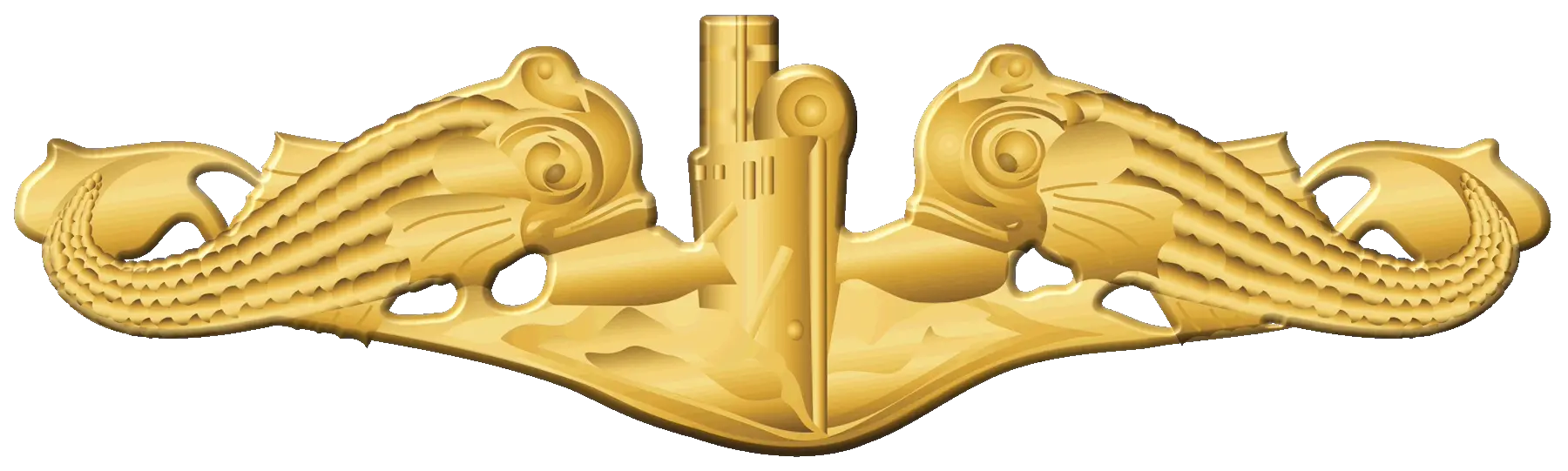
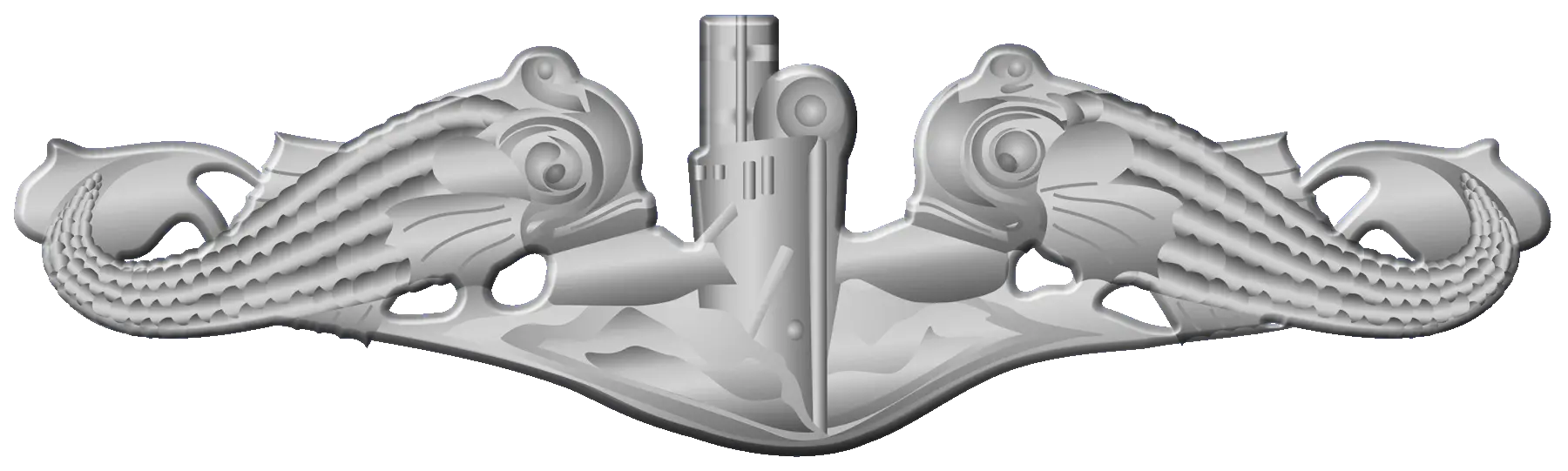
Successful completion of the qualification process is marked by the awarding of the Submarine Warfare insignia, commonly known as the "Dolphins." The insignia features two dolphins flanking the bow of a submarine and is one of the most recognizable symbols in the Navy. More than a badge, the Dolphins represent months of hard work, perseverance, and the trust of fellow crew members.
Gold Dolphins
Submarine Qualified · Officer
Silver Dolphins
Submarine Qualified · Enlisted Sailor
Both insignia signify that a Sailor is qualified in submarines. Gold is worn by officers, silver by enlisted Sailors.
Receiving the Dolphins signifies that a Sailor has demonstrated the knowledge, professionalism, and commitment required to operate as a member of the submarine force. It is an achievement earned through effort rather than rank, which makes it especially meaningful among submariners. For many Sailors, the day they receive their Dolphins is one of the proudest moments of their naval careers.
A Tradition of Excellence
The submarine qualification process has remained a cornerstone of submarine culture for generations. It ensures that every Sailor possesses the knowledge needed to support the mission and protect shipmates in one of the most demanding environments in the military. The Dolphins worn on a submariner's uniform serve as a daily reminder of that responsibility. They represent competence, teamwork, and a commitment to excellence, qualities that continue to define the Silent Service and the Sailors who proudly serve beneath the sea.
Systems Spotlight · NJ Industry
The Quietest Ship in the Room Was Built to Be Heard
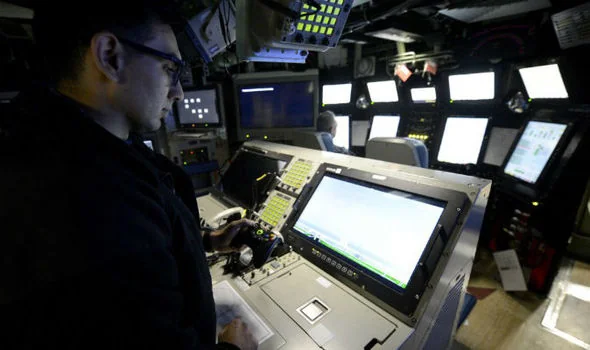
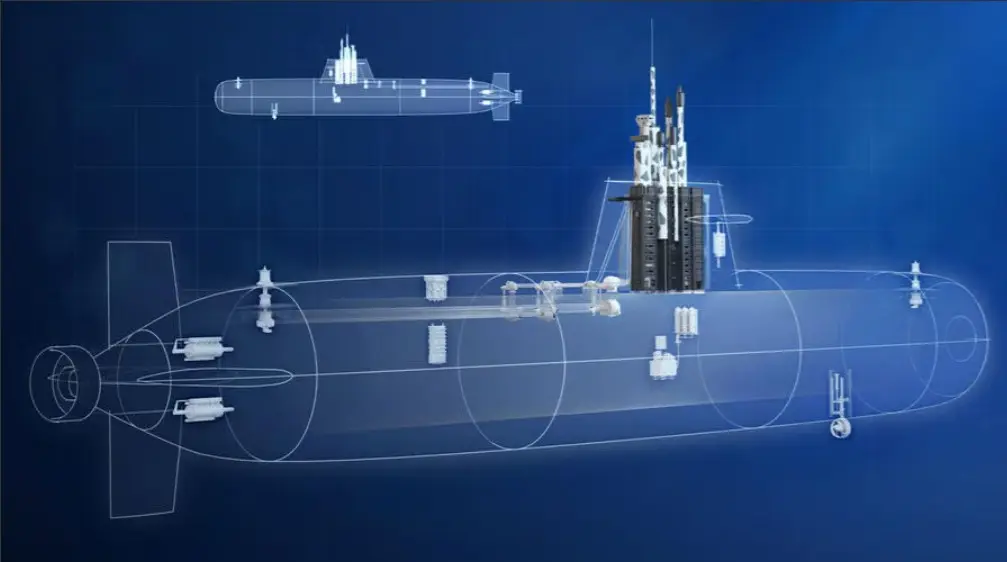
A Sailor mans the photonics mast controller aboard a Virginia-class submarine. Source: RedditL3Harris integrated submarine mast system diagram. Source: L3Harris
A Virginia-class submarine can sit off a contested coastline for weeks, listening to everything and revealing nothing. When command needs her, she receives the message at depth. When the captain needs to look, a mast breaks the surface for seconds and pulls down imagery sharp enough to read a hull number.
That triad, listening, communicating, seeing, runs on three systems: towed acoustic arrays, an integrated communications suite, and the photonics mast that replaced the optical periscope.
L3Harris designs and builds all three. The company is the sole source for every periscope system in the U.S. submarine fleet.
Much of that work happens in Camden, New Jersey. The Camden site engineered and produced the communications suite aboard USS New Jersey, and in February 2026 won a follow-on contract to deliver 26 more through 2033.
From the Crew
Life in Norfolk: A Busy 2026
Life in Norfolk, homeport of our favorite submarine, has been busy. Here is some of what the crew of USS New Jersey (SSN-796) has taken on so far in 2026.
Post Shakedown Availability Complete
On April 3, 2026, Newport News Shipbuilding redelivered USS New Jersey to the Navy after an extensive Post Shakedown Availability. This phase follows the commissioning of a new warship: it corrects items found during initial operations and adds upgrades before full fleet employment. The work included combat systems upgrades, electronics modernization, general maintenance and corrective actions, and final preparations for sustained fleet operations. Completing it marked the boat's transition from a newly commissioned vessel to a fully operational fleet asset.
Back Underway
Operational again, the boat has since returned from a series of underway periods focused on training, recertification, testing, and calibration, along with exercises aimed at sharpening readiness. Much of the crew is new, to submarines or to New Jersey or both, and a major effort went into helping these Sailors qualify, as the qualification story earlier in this issue describes.
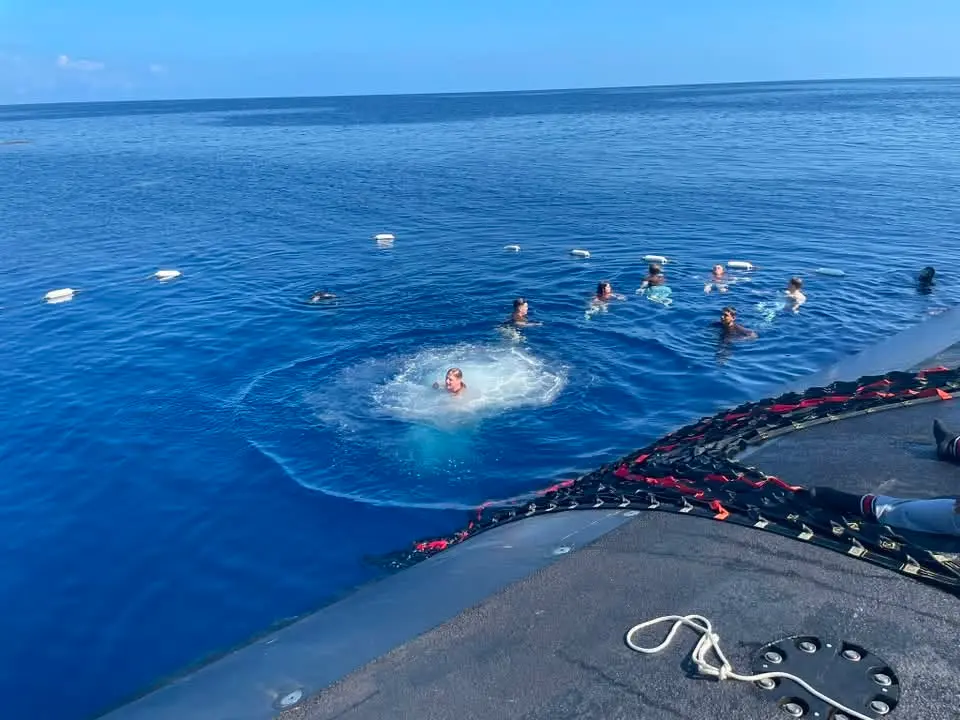
There was time for some fun, too. In a message to the crew and families, the COB wrote: "Last underway we had the opportunity to have two swim calls, completed a major ship's inspection, and really learned how to operate as a team. I'm incredibly proud of how well the crew handled every challenge. Firepower for Freedom!"
Combat Ready Romeo Flag
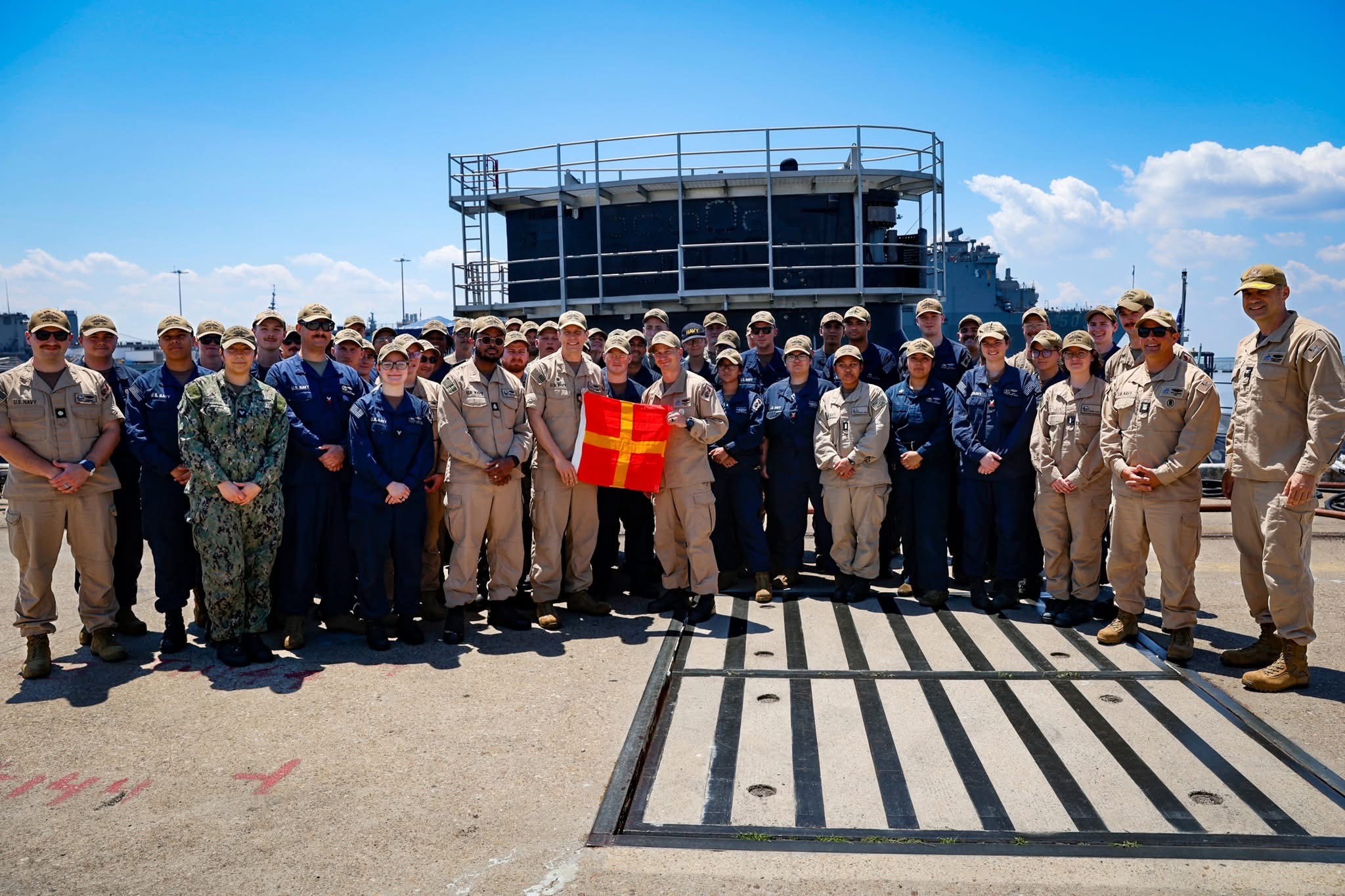
Congratulations to CDR Simmons and the crew on officially receiving the Combat Ready Romeo Flag, presented by Commodore Jordan. The red and yellow Romeo flag has long marked a Ready Duty Ship, a clear signal that USS New Jersey is prepared to answer the call.
Recognitions
The galley also earned a culinary award, the food-service equivalent of a Battle "E". And two Sailors qualified in submarines and earned their dolphins this spring. Bravo Zulu to both.
Diego Lopez Diaz
TMFA
Qualified in Submarines
May 12, 2026
Taylor Rutherford
FTSN
Qualified in Submarines
May 27, 2026
Advancements
Congratulations to the following Sailors of USS New Jersey (SSN-796) on their recent advancement. Bravo Zulu to all.
Claudia Veronica Casillas
STS2
Advanced
Erik Austin Clow
ITN1
Advanced
Ava Catherine Duerk
ETN1
Advanced
Donovin Bernard Henderson
FT2
Advanced
Elexis Marie Leary
TM2
Advanced
Kyle Shane Ozment
ITN2
Advanced
Alfred Mark Salinas
ITE1
Advanced
Makhi Jazae Sanders
ITE2
Advanced
Gavin Reagan Sapp
ITE2
Advanced
Caleb Troy Vickers
FT2
Advanced
Taylor Rae Watson
MMN1
Advanced
America 250
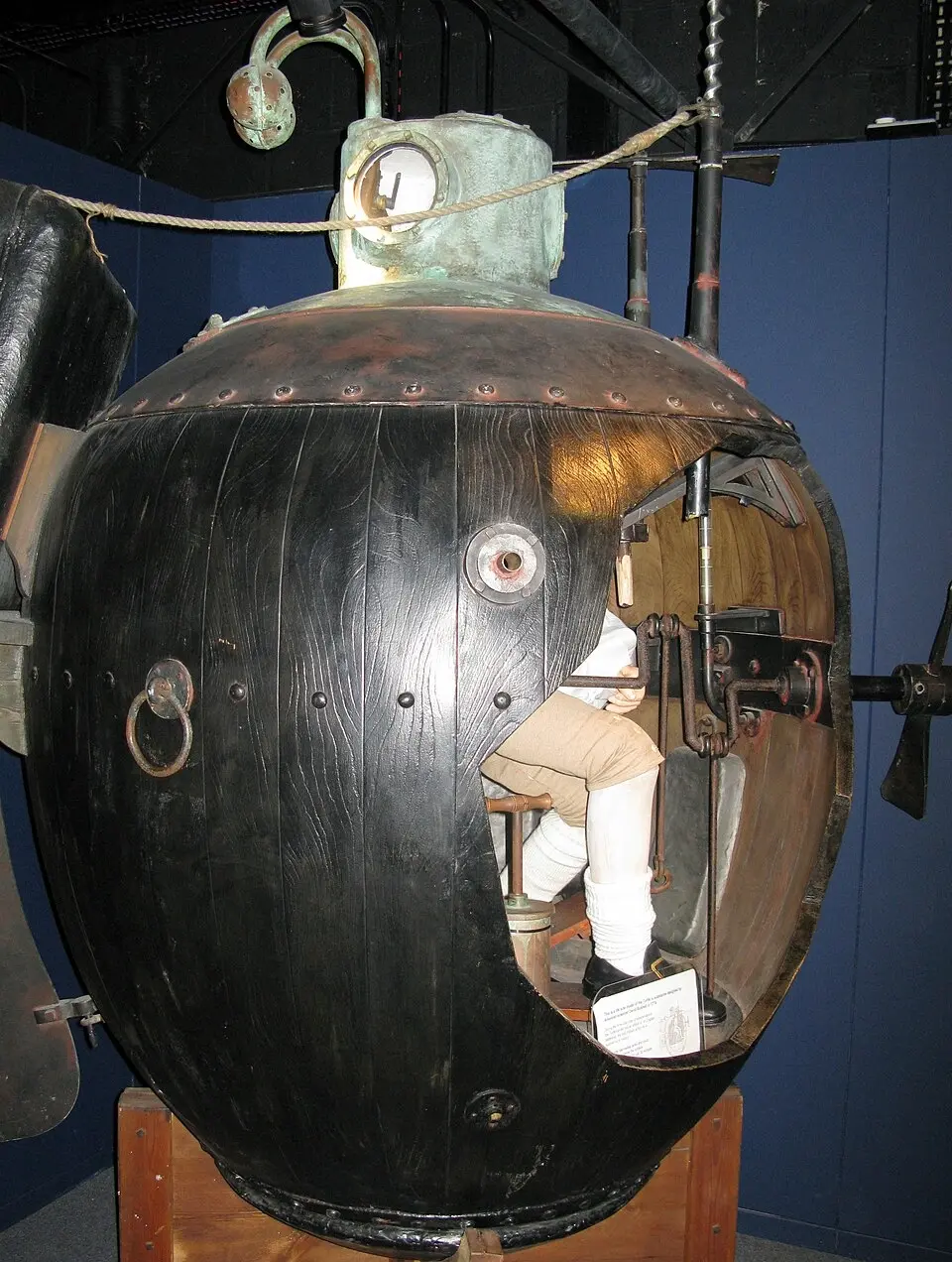
Before the Dolphins: Turtle and America's First Submarine Attack
Image: Full-size model of Bushnell’s Turtle submarine, photo by Geni, via Wikimedia Commons, CC BY-SA 4.0.
Following the defeat of the British Army in Boston in March 1776, General George Washington marched his Continental Army south to defend New York City. British General William Howe followed Washington to New York and by June, the British Navy under the command of Admiral Richard Howe (his brother) began amassing ships and troops in New York Harbor. By mid-summer, the British Navy had assembled 400 warships and transports off New York. In late August, Admiral Howe's fleet provided transport and bombardment in support of the Battle of Long Island. Over several days, General Howe's forces drove Washington's Army across the East River to Manhattan, and eventually to New Jersey. By the end of the summer, the British controlled New York City.
Late in the evening of September 7, 1776, Sergeant Ezra Lee slipped into the top of the egg-shaped vessel bobbing low in the Hudson River. Admiral Howe's flagship, HMS Eagle, lay at anchor off of Governor's Island. Quietly and under darkness, Sergeant Lee guided his vessel into the harbor and set a course for the Eagle. A blow to the flagship of the British fleet would be a huge boost to morale and could help break the blockade of the city.
This strange contraption, named Turtle, was the creation of David Bushnell and Isaac Doolittle. Bushnell, while a student at Yale University, proved that gunpowder could explode underwater. If a vessel could covertly plant an explosive device on an enemy warship, it could be a formidable weapon of war. At the urging of Connecticut Governor Trumbull, General Washington bankrolled Bushnell's efforts starting in 1771. Bushnell, with the aid of Doolittle, a New Haven metalmaker and mechanic, built and tested his invention up the Long Island Sound in Saybrook, Connecticut. At ten feet long, six feet tall and three feet wide, the oak hull was just big enough to fit one man. The operator controlled propulsion and depth with foot- and hand-controlled brass propellers designed by Doolittle, believed to be the first of their kind used on a ship. Ballast water was removed with a hand pump, and lead ballast could be jettisoned to quickly bring the vessel to the surface. The first pilot of the vessel was Bushnell's brother, Ezra, who perfected the intensive operations of the submersible in the Connecticut River.
As the siege of New York intensified, Ezra became ill and Sergeant Lee was picked as the substitute pilot for Turtle. With only two weeks of training in Long Island Sound, Sergeant Lee would pilot Turtle on its inaugural mission. The harbor was dark and currents were swift, but Sergeant Lee found his target after two hours of transit. On the surface, he lit the fuse of the explosive and submerged Turtle. A Doolittle-designed screw was to be used to affix the explosive "torpedo" to the wooden hull. After multiple attempts, Sergeant Lee could not get penetration near the rudder to attach the explosive. With only about 30 minutes of air in the Turtle, Lee was forced to disengage and scuttle the torpedo.
As it floated away, Lee reported it exploded "with tremendous violence, throwing large columns of water and pieces of wood that composed it high into the air."
Lee attempted one more mission with Turtle in New York Harbor on October 5 but reported that the ship's lookout spotted him and he aborted. Turtle was lost several days later when the sloop serving as her tender was sunk by British warships. Bushnell continued his work on underwater mines throughout the war.
As the United States celebrates 250 years, we remember the ingenuity of David Bushnell and Isaac Doolittle and the bravery of Ezra Bushnell and Sergeant Ezra Lee, the team that realized the vision of a combat submersible. It would take until 1900, another 124 years, for the Elizabeth-built USS Holland (SS-1) to be commissioned as the first submarine of the U.S. Navy.
Heritage · Living History
From BB-62 to SSN-796: Honoring Paul Robbins
1 / 7
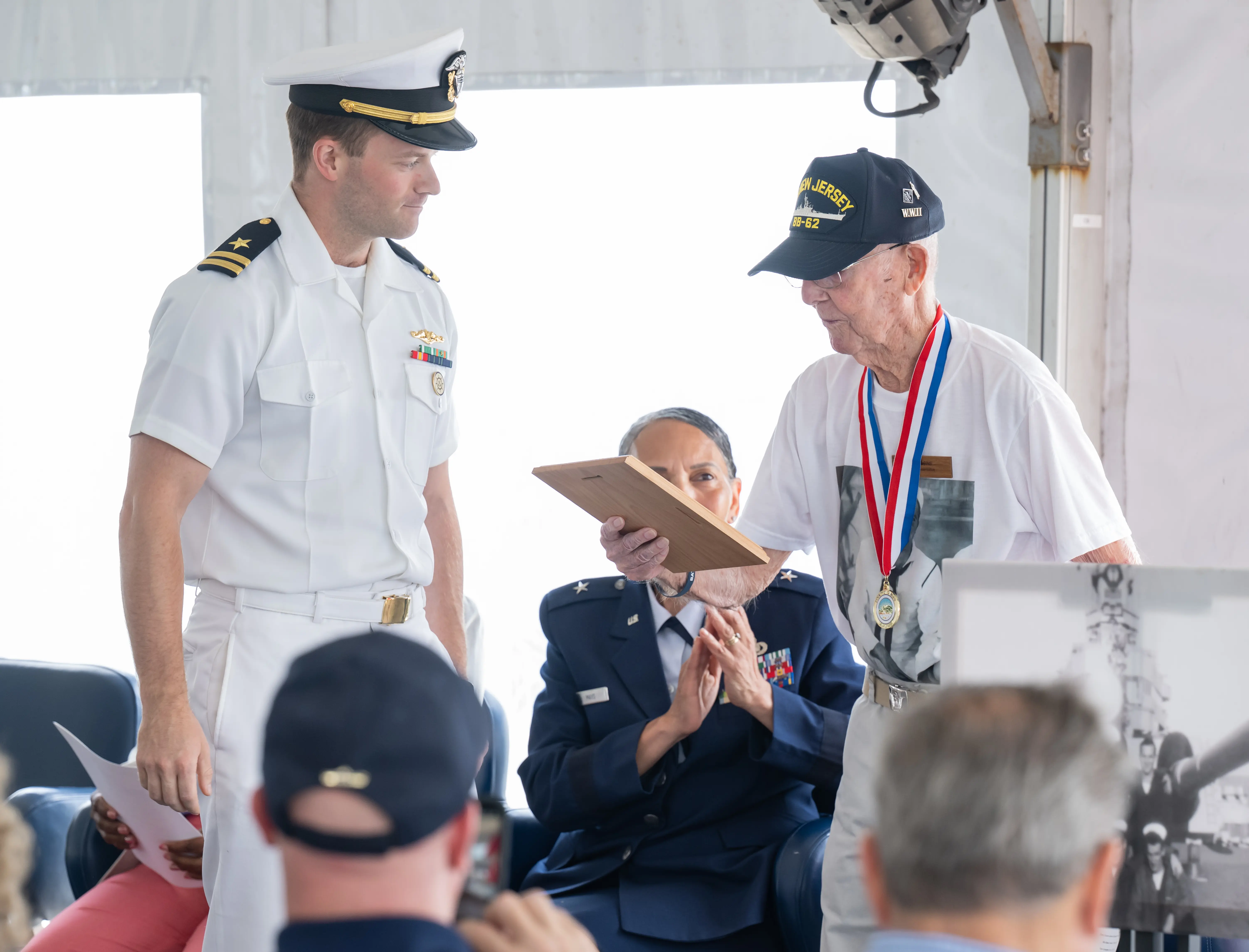
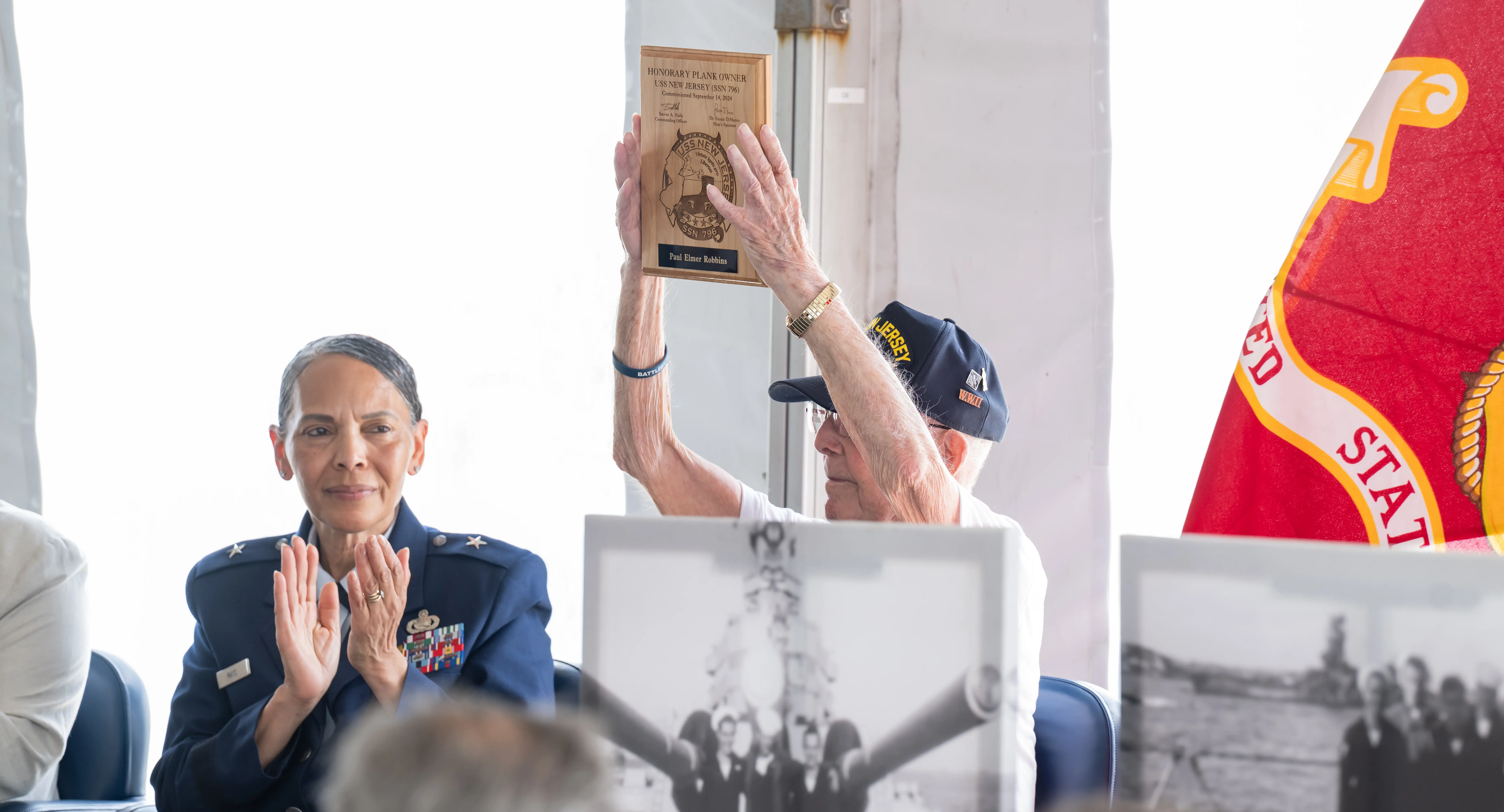
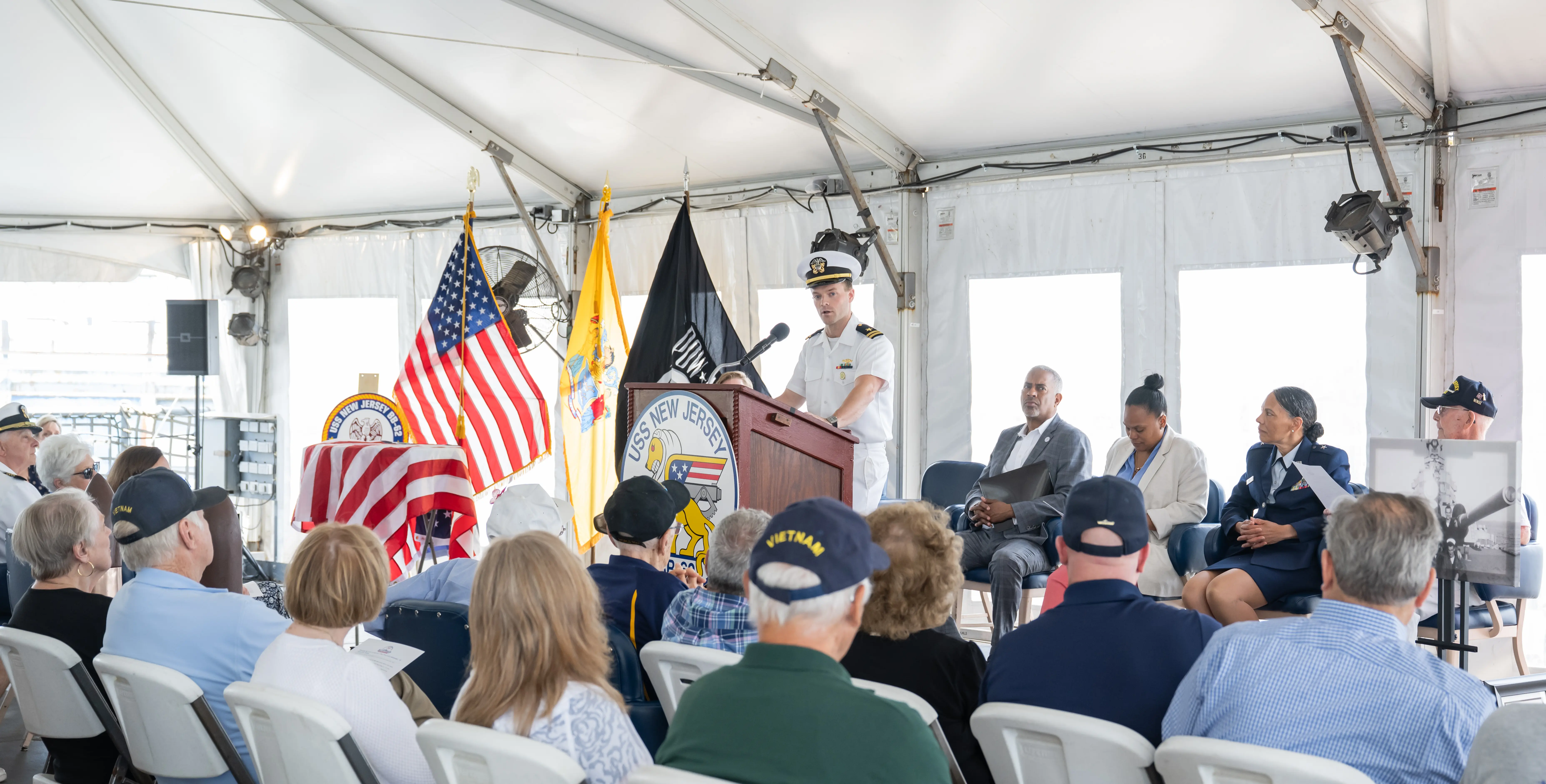
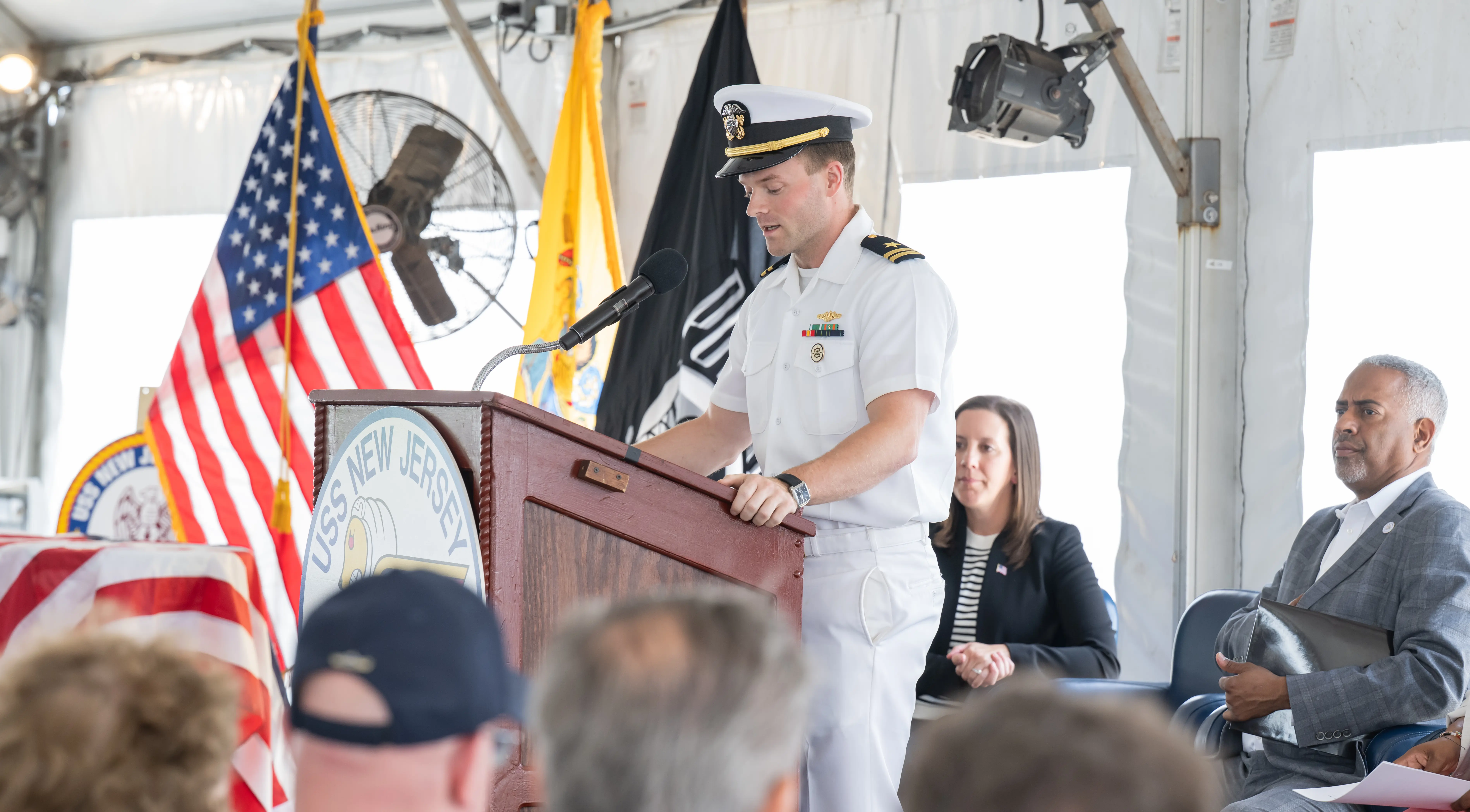
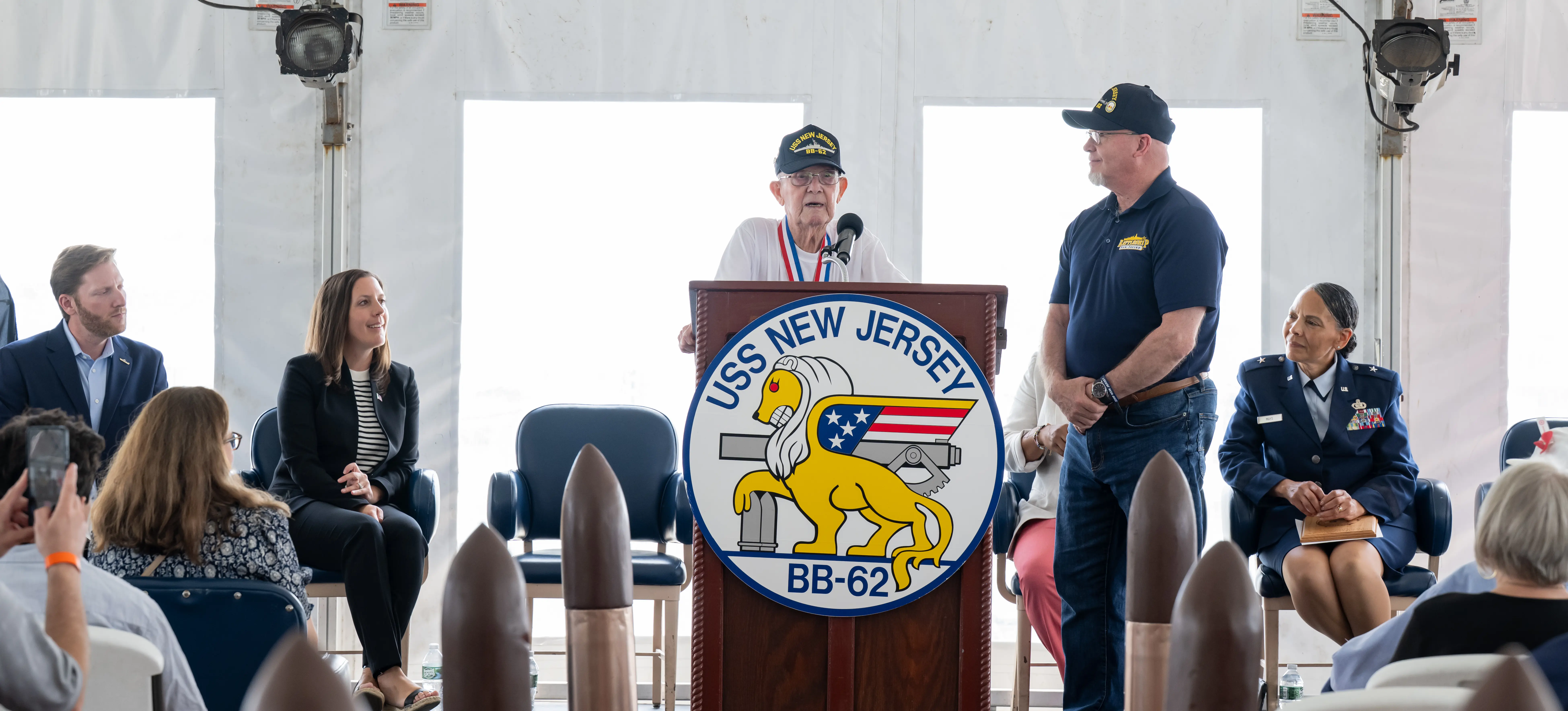
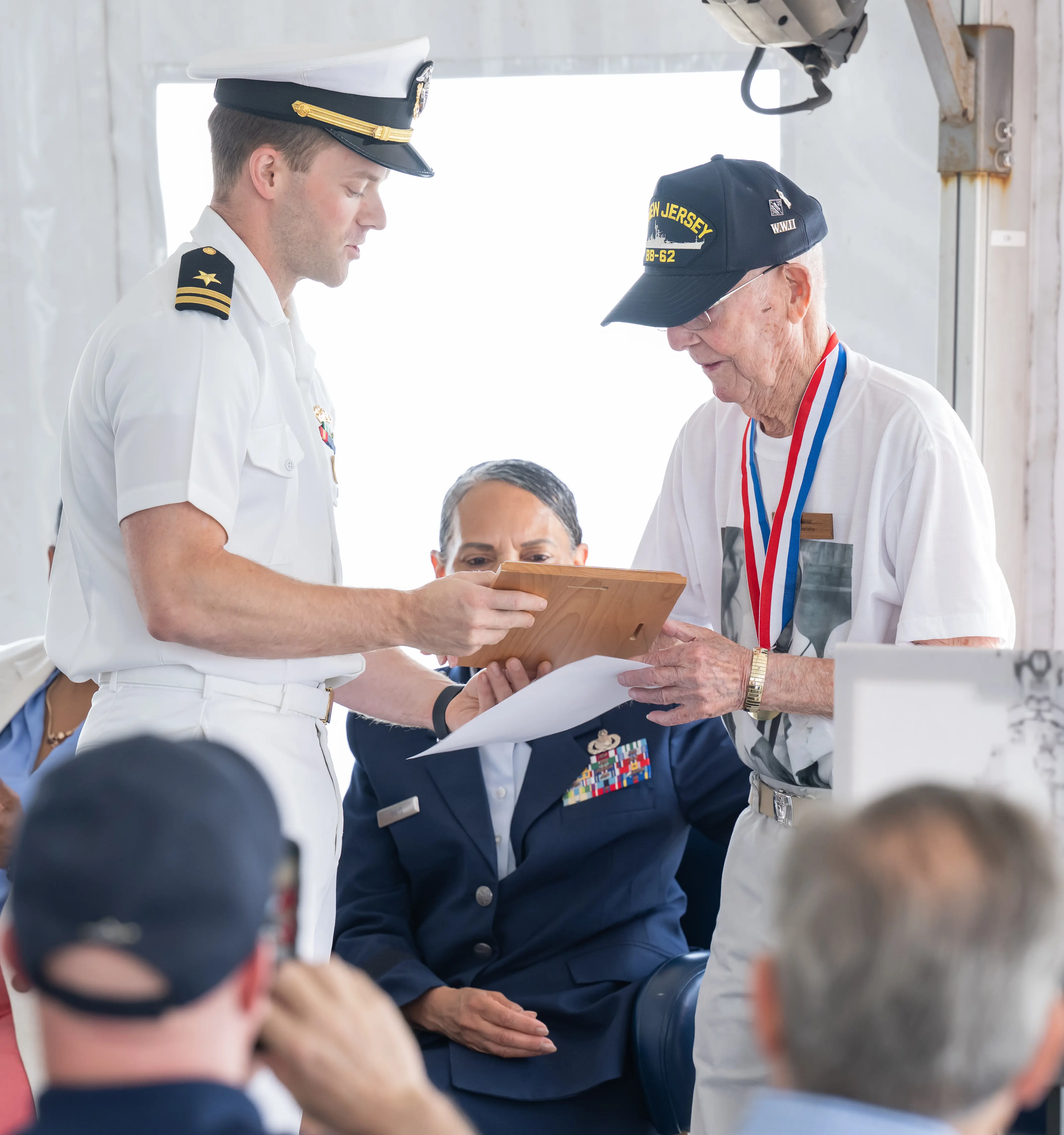
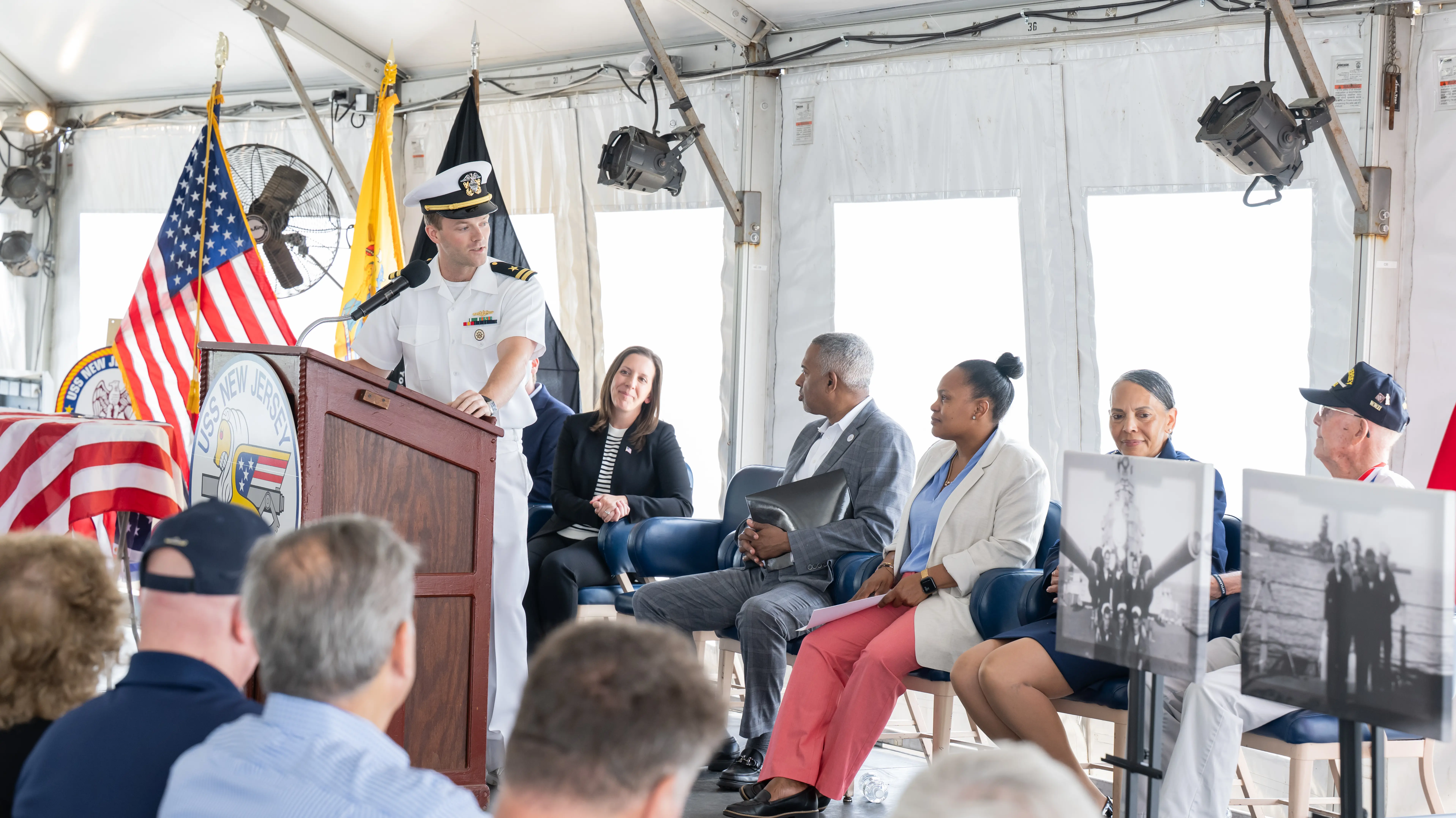
On June 15, aboard Battleship New Jersey in Camden, 101-year-old Paul Robbins returned to the ship he once called home.
Mr. Robbins is believed to be the last known living World War II plank owner of USS New Jersey (BB-62). He reported aboard the battleship on her commissioning day in 1943 and served in the Pacific during World War II. More than eight decades later, he was welcomed back aboard the “Big J” to be recognized for his service, his place in the ship's history, and the generation he represents.
The ceremony also created a meaningful connection between the battleship and today's USS New Jersey (SSN-796). LT Matthew Dods, USN, represented the submarine and presented Mr. Robbins with an Honorary Plank Owner plaque on behalf of Steven Halle, USN (Ret.), the commissioning commanding officer of USS New Jersey (SSN-796).
It was a simple moment, but a powerful one: a Sailor from today's New Jersey honoring a Sailor from the New Jersey that carried the name through World War II.
For our Support Organization, this story belongs here. BB-62 and SSN-796 are separated by generations, technology, and mission, but they are tied by name, state, service, and legacy. Paul Robbins helped write the first chapters of that legacy aboard the battleship. The crew of SSN-796 now carries it forward beneath the sea.
Bravo Zulu to Mr. Robbins, to Battleship New Jersey Museum & Memorial, and to all who helped bring this moment together.
Upcoming
Events for the Next 90 Days
Navy and maritime happenings that supporters and families can enjoy this summer, with a strong New Jersey tie.
July 3 to 9, 2026
Sail4th 250: Parade of Sail and International Naval Review
Port of New York and New Jersey
The largest international maritime event in U.S. history anchors America's 250th birthday: more than 50 tall ships from over 20 nations, 40-plus allied and U.S. naval vessels, and the U.S. Navy Blue Angels. Strong New Jersey viewing from Liberty State Park in Jersey City, the Palisades near Fort Lee, and Sandy Hook Bay in Monmouth County.
America's 250th Birthday Fireworks aboard Battleship New Jersey
Battleship New Jersey (BB-62), 62 Battleship Place, Camden, NJ
Watch fireworks over the Delaware River from the decks of the Navy's most decorated battleship, the namesake that connects generations of New Jersey Sailors. General admission is fifteen dollars; ship touring earlier in the day is ticketed separately.
Once the visiting tall ships are berthed, many open for free public visitation at sites around the harbor. A memorable, low-cost outing for families who want to step aboard a working sailing vessel and meet crews from around the world.
Always confirm dates, times, and ticketing on the official event sites before you go.
Support the Boat and Her Crew
Every bit of support back home helps the Support Organization keep morale high and families connected to USS New Jersey (SSN-796). Grab a piece of gear from the Ship's Store, share this newsletter, or reach out to get involved.
Twenty clues across the Silent Service, the boat, and the Garden State. Ten across and ten down, every letter in play. Type right in the grid, or print it for the wardroom. Tip: several answers are hiding in this issue's stories.
1
2
3
4
5
6
7
8
9
10
11
12
13
14
15
16
17
Across
David ___, the Yale man who built Turtle (8)
What a boat flies; the crew flew a Combat Ready Romeo one (4)
A boat's primary weapon, fired from a tube (7)
Old way to look topside while staying under (9)
The branch SSN-796 belongs to (4)
Tanks you flood to descend and blow to surface (7)
Status of a boat that has left the pier (8)
New Jersey county and famous 1778 battle (8)
Backbone of the hull, laid first (4)
Support ship that services a sub (6)
Down
The two dolphins on the insignia flank this end (3)
Sergeant Ezra ___, Turtle's stand-in pilot (3)
Where the award-winning culinary team feeds the crew (6)
British brothers, a general and an admiral, off New York in 1776 (4)
Bushnell's 1776 submersible, America's first attack sub (6)
The USS New Jersey (SSN 796) Support Organization sends a free quarterly update on the boat, her crew, and ways to help. Sign up to get the next issue, and feel free to forward this one to family, shipmates, or anyone who supports our Sailors.